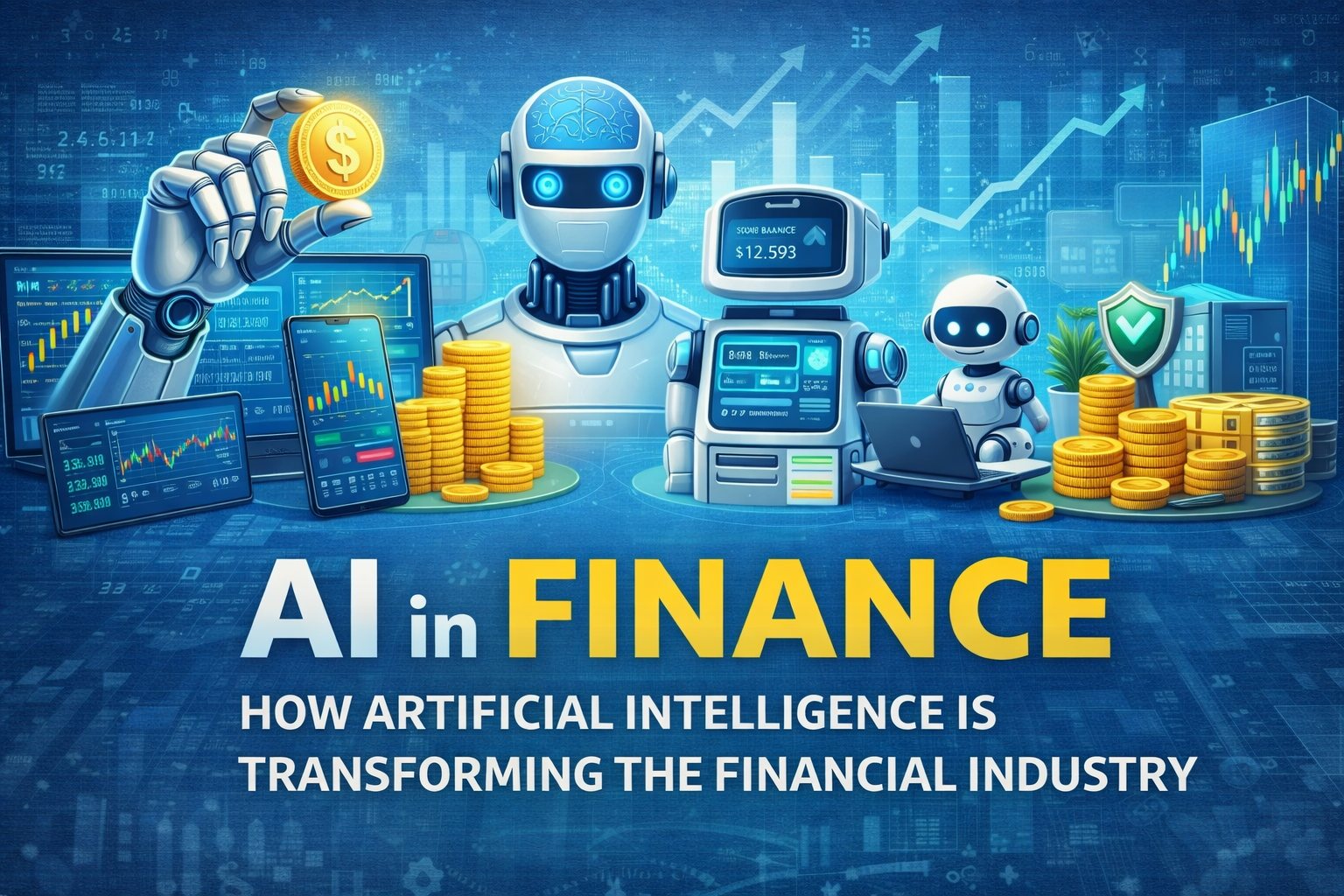
Artificial Intelligence (AI) is rapidly reshaping the global financial sector. From fraud detection and algorithmic trading to personalized banking and automated investment advice, AI is making financial services faster, smarter, and more efficient. Financial institutions, fintech startups, and investment firms are increasingly relying on AI to analyze large amounts of data and make better decisions.
This article explores how AI is transforming finance, its benefits, real-world applications, and what the future holds for AI-driven financial systems.
📊 What Is AI in Finance?
AI in finance refers to the use of machine learning, data analytics, and automation technologies to improve financial services and decision-making.
AI systems can:
- Analyze massive datasets quickly
- Detect patterns in financial transactions
- Predict market trends
- Automate complex financial tasks
These capabilities help banks and fintech companies reduce costs and improve efficiency.
🏦 Major Applications of AI in Finance
1️⃣ Fraud Detection & Security
One of the most important uses of AI in finance is fraud prevention.
AI systems monitor transactions in real time and can detect suspicious activity by analyzing patterns. This helps banks stop fraudulent transactions before they cause damage.
Benefits include:
- Faster fraud detection
- Reduced financial losses
- Improved cybersecurity
2️⃣ Algorithmic Trading
AI-powered trading systems analyze market data and execute trades automatically.
These systems can:
- Monitor global markets
- Identify trading opportunities
- Execute trades in milliseconds
Many hedge funds and investment firms use AI-based trading strategies to improve performance.
3️⃣ Robo-Advisors
Robo-advisors are AI-driven investment platforms that provide automated financial advice.
They help users:
- Build investment portfolios
- Manage risk
- Rebalance assets automatically
Robo-advisors make investing accessible to beginners who may not have access to traditional financial advisors.
4️⃣ Credit Scoring & Loan Approvals
Traditional credit scoring systems rely on limited financial history. AI improves this process by analyzing additional data sources.
AI can evaluate:
- Spending habits
- Payment history
- Digital financial behavior
This allows lenders to make faster and more accurate lending decisions.
5️⃣ Customer Support with AI Chatbots
Banks now use AI chatbots to assist customers 24/7.
These chatbots help users:
- Check account balances
- Track transactions
- Get financial advice
This reduces the workload on human customer service teams and improves customer experience.
💡 Benefits of AI in Finance
⚡ Faster Decision-Making
AI processes large datasets instantly, enabling quick financial decisions.
📉 Reduced Operational Costs
Automation lowers staffing and operational expenses.
🔐 Improved Risk Management
AI identifies financial risks earlier through predictive analytics.
📊 Better Investment Strategies
AI models analyze market trends and improve portfolio performance.
⚠️ Challenges of AI in Finance
Despite its advantages, AI also presents challenges.
Data Privacy Risks
Financial institutions must protect sensitive customer data.
Algorithm Bias
Poorly trained AI models can lead to unfair lending decisions.
Regulatory Compliance
Governments are still developing regulations for AI-based financial services.
🌍 The Role of Fintech in AI Finance
Fintech companies are leading innovation in AI-powered financial services.
Popular innovations include:
- Digital banking platforms
- Automated wealth management
- AI risk assessment systems
- Blockchain-based financial tools
Fintech startups are making financial services more accessible and efficient.
🔮 The Future of AI in Finance
The future of finance will be heavily influenced by AI technologies.
Expected developments include:
- Fully automated digital banks
- AI-driven financial planning
- Real-time risk prediction
- Hyper-personalized banking services
As technology advances, AI will continue to transform how individuals and businesses manage money.
🏆 Conclusion
Artificial Intelligence is revolutionizing the financial industry by improving efficiency, security, and decision-making. From fraud detection to automated investment strategies, AI is helping financial institutions deliver smarter and more personalized services.
As fintech innovation continues to grow, AI will play a central role in shaping the future of global finance.